Sunday, March 22, 2009


Tuesday, February 24, 2009
Mourning the Loss of OCO
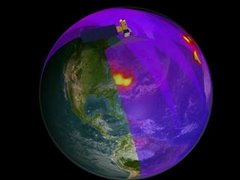
 This morning, the Taurus XL rocket that was to shepherd the Orbiting Carbon Observatory (OCO) to its orbit, 700 km above the Earth's surface, failed deliver its payload. According to the press conference, the Taurus XL fairing (the shell that protects a payload during launch) failed to separate at its scheduled time. The added mass of the fairing prevented the second stage of the rocket from boosting OCO into its orbit. The fairing, with its precious cargo inside, plummeted into the Antarctic Ocean. OCO was the first NASA mission dedicated to measuring CO2 in the atmosphere. Its data would have given NASA Earth scientists a view into the sources, cycles, and sinks of CO2 in the atmosphere, leading to a better understanding of the inputs to global warming processes.
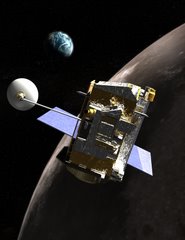
Today, I personally mourn the loss of OCO. I was driving to work at Goddard Space Flight Center this morning when I heard a local radio station announce that "NASA had lost a mission to understand global warming." My heart sunk. I yelled out loud "No, no no! Don't let it be OCO! Don't let it be OCO!" even though I knew in my heart that it was exactly that spacecraft we had lost. It's weird to say that I'm mourning the loss of a satellite. After all, it is only an inanimate object. But being so close to LRO, a mission that's only months out from launching, I understand all too well the amount of effort it takes to design, build, and launch one of these precious commodities. My sadness is felt for those people who were involved in the mission in addition to the loss of the precious scientific data (and resulting understanding) that OCO would have brought.
The wealth of understanding about the Earth we have gained from the fleet of spacecraft in orbit around the Earth is priceless. We will continue to design and build spacecraft that help us understand and protect the Blue Marble we call home. That's what we do, and we do a fine job of it.

Wednesday, December 17, 2008
Global Cloud Observation Day - Jan. 13, 2009!
In celebration of its 12th anniversary, NASA’s Students’ Cloud Observations On-Line (S'COOL) Project is declaring Jan. 13, 2009 to be a Global Cloud Observation Day. See
http://asd-www.larc.nasa.gov/SCOOL/Enotes/en_dec2008.html for the latest information.
You can also find a PDF file for a tabloid-sized version of the flyer here:
http://asd-www.larc.nasa.gov/SCOOL/PDF/global_cloud_observation_day.pdf
http://asd-www.larc.nasa.gov/
You can also find a PDF file for a tabloid-sized version of the flyer here:
http://asd-www.larc.nasa.gov/
Tuesday, December 2, 2008
NASA INVITES STUDENTS TO NAME NEW MARS ROVER
Entries Due: Jan. 25, 2009
NASA, in cooperation with Walt Disney Studios Motion Pictures' movie WALL-E from Pixar Animation Studios, will conduct a naming contest for its car-sized Mars Science Laboratory rover that is scheduled for launch in 2009. The contest is open to students 5 to 18 years old who attend a U.S. school and are enrolled in the current academic year. To enter the contest, students will submit essays explaining why their suggested name for the rover should be chosen. In March 2009, the public will have an opportunity to rank nine finalist names via the Internet as additional input for judges to consider during the selection process. NASA will announce the winning rover name in April 2009.
http://marsrovername.jpl.nasa.gov
NASA, in cooperation with Walt Disney Studios Motion Pictures' movie WALL-E from Pixar Animation Studios, will conduct a naming contest for its car-sized Mars Science Laboratory rover that is scheduled for launch in 2009. The contest is open to students 5 to 18 years old who attend a U.S. school and are enrolled in the current academic year. To enter the contest, students will submit essays explaining why their suggested name for the rover should be chosen. In March 2009, the public will have an opportunity to rank nine finalist names via the Internet as additional input for judges to consider during the selection process. NASA will announce the winning rover name in April 2009.
http://marsrovername.jpl.nasa.
Subscribe to:
Posts (Atom)