My last day at the ASTC meeting was short...
Tuesday, October 16, 2007:
Web 2.0 session
After checking out of the hotel this morning, I made my way over to the convention center for one last session on how museums are embracing Web 2.0. First up was someone from the Ontario Science Centre. He gave an overview of common social media Websites, which are sites where users publish the content and have the choice of interacting with each other, and some statistics to go with it: ~96% of 9-17 year olds and ~75% of 18-35 year olds use social media sites. Obviously museums and other educational entities need to embrace social media if they want to reach these age groups to the fullest extent possible. Examples of social media sites include MySpace, Facebook, YouTube, Flickr, Twitter, Wikipedia, blogs, etc. Of course, if you're reading this blog you're probably already familiar with most if not all of these! One that I learned about from this presenter is Instructables, a site in which users "share what they do and how they do it, and learn from and collaborate with others". Ever wanted to attach a sink to the top of your toilet? If so, you can learn how to do it and LOTS of other random things here.
In any case, some museums are starting to embrace and use social media to both their advantage and that of their real life and virtual visitors. For example some museums are using Facebook and MySpace to communicate with visitors and keep them updated as to events and openings. This is also a good way for museums to get feedback and to reach people that they may not have otherwise. For example, if one of your friends on MySpace lists a museum or science center as one of their friends, you might be inclined to click on that museum's MySpace page and see what's going on. Other museums are using Twitter, a site in which people all over the world simply answer the question "What are you doing right now?", to give people a glimpse of what goes on behind the scenes in their museum. The writer of the Museum 2.0 blog (who was one of the presenters in this session - see below) provides examples of how and why museums are using some of these sites and others with more detail and eloquence than I have time for here. Read her posts on Twitter and blogs.
The second presenter was from the Science Museum of Minnesota which actually has its own blog on how museums use technology and the Web. He gave more examples of how museums are using Web 2.0, such as his museum's ScienceBuzz, which I discussed in a previous post.
The third presenter was from www.museumblogs.org, which is a blog that tracks other museum-related blogs. He said that of the museums that blog, ~60% publish fewer than 5 times per month (as of Jan. 2007). In order for a museum's blog to be successful, it must "publish or perish!!" Science museums make up only ~15% of museum blogs. I wonder why?
The last presenter was from the Museum 2.0 blog that I mentioned above and in an earlier post. She spoke mostly about museums in Second Life. Successful museums within Second Life are those that offer extensive programming and opportunities for social interaction in addition to great exhibits and builds. An example is the International Spaceflight Museum, which actually not does not have a real life counterpart. In addition to a fantastic rocket garden, a solar system exhibit that you access via a rocket ride into low Earth orbit, and other great exhibits, it also offers a weekly jazz concert on Thursday nights. Even though one can argue that the concert is not educational in nature, it provides an opportunity for people to interact in the museum setting, which can lead to discussions about the museum and its content, other related topics, etc.
In addition to museums, NASA and other federal agencies, such as NOAA, are building and interacting with the public in Second Life. For more information on their activities click here: NASA, NOAA. For those of you that already have a Second Life account (which is FREE by the way) and wish to visit their builds directly, click here: NASA, NOAA. I'll write more on NASA in Second Life at another time.
Showing posts with label museums. Show all posts
Showing posts with label museums. Show all posts
Wednesday, October 24, 2007


Friday, October 19, 2007
ASTC Day 2
This is a continuation of my experiences at the ASTC 2007 annual meeting...
Saturday, October 13, 2007:
Keynote:
This morning I attended the annual ASTC "meet and greet" breakfast, where I got to meet some of my colleagues from NASA for the first time. The morning’s keynote speaker was Geoffrey Canada, CEO/President of the Harlem Children’s Zone. His main point was that educating youth and their parents is the key to reducing crime in America. He suggested that we focus on engaging young people in bettering their communities so that they feel they’re living in a worthwhile place and doing worthwhile things. The goal is not to just get people into college such that they never return to their hometowns - instead he would prefer to see them want to return so that they can continue to make their communities better. Other suggestions: Optimism is key and contagious – we should all try it! Think outside the box. Remember that we all live in a global village.
NASA exhibit booth:
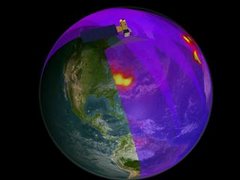
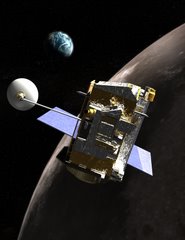
Helping staff the NASA exhibit booth was a lot of fun because I got to meet fellow informal science educators from all over everywhere. The NASA booth was a big hit, due in part to all the cool freebies we had to give away (like posters about the Lunar Reconnaissance Orbiter mission, trading cards with photos of Saturn's moons taken by the Cassini mission, lenticulars from the STEREO mission, etc.) and because we had an actual Apollo lunar sample and a shuttle tire that people could touch!
Sessions:
The "NASA Update" session focused largely on the upcoming 50th Anniversary of NASA on October 1, 2008. NASA has already launched a 50th Anniversary website where you can find information pertaining to all of the agency's anniversary-related plans and initiatives, including NASA's participation in the 2008 Smithsonian Folklife Festival. The session leaders also mentioned the new Field Trip to the Moon DVD and educational program developed by the American Museum of Natural History in partnership with NASA. The DVD and educational materials are available to educators for FREE!
The "Museums 2.0" session was also fantastic. The writer of the Museum 2.0 blog was one of the session leaders. She gave an overview of what Web 2.0 means and gave a couple examples of websites I hadn't heard of before: http://www.librarything.com/ and http://www.ilikemuseums.com/. These sites let users choose if they want to interact socially with other users. Other session leaders included representatives from several museums and science centers with Museum 2.0-style exhibits (i.e. the exhibits encourage or offer opportunities for visitors to interact with each other, museum staff, and/or help create and shape the exhibit). The Ontario Science Centre, for example, has a sort of "scientific Times Square" in which visitors can view dynamic content and interact with each other and museum staff. The OSC also hosts an interesting website: http://www.redshiftnow.ca/. The Science Museum of Minnesota hosts a website called Science Buzz that allows for interactive social blogging by visitors and museum staff.
Polar-palooza!!
On Saturday evening I saw a preview of the International Polar Year initiative called Polar-palooza. It was absolutely fantastic and sobering at the same time. The scientists involved did an excellent job of communicating recent observations that indicate our poles are rapidly changing. Polar-palooza can be tailored to fit any audience and age group from students to the general public. I greatly encourage you to visit your nearest Polar-palooza event for an eye- and mind-opening experience.
Subscribe to:
Posts (Atom)