More highlights from my time at the ASTC meeting...
Sunday, October 14, 2007
Keynote
This morning's keynote had two speakers - Adam and Jamie from the Discovery Channel's MythBusters!! I have to admit that although I'd heard of MythBusters, I'd never actually watched an episode. After hearing Jamie and Adam talk however and seeing how truly interested they are in helping teach us a little science through debunking urban legends, I have to say I plan to start watching. It was really cool to hear them talk about how they became interested in science, how they come up with ideas for the show, and how difficult it can be to convince the producers (and their insurance agents!) to let them go through with said ideas. A highlight of their keynote was getting to view never-before-aired footage from "Facts about Flatulence". You'll have to check it out for yourself...
Experience Design session
Aside from helping to work the NASA booth, I attended a session on Experience Design. The session focused on encouraging visitor learning through themed experiences. For example, the Franklin Institute in Philadelphia (site of the 2008 ASTC meeting) has created a series of programs in which school groups don't just visit the museum, see a bunch of exhibits and/or presentations about unrelated topics, and then leave. Instead, their visits, called "Experiences", focus on a central them from start to finish such that the experience provides "hands-on, auditory and visual reinforcement". Experiences focus on a featured exhibit, the theme of which is coordinated with a hands-on workshop, an interactive science show, and a thematically related IMAX or planetarium show. An example is their "Identity Experience". Another one of the presenters was an Imagineer for Disney. He talked about the work that went into designing and building the new Finding Nemo Submarine Voyage attraction that opened this summer at Disneyland in CA.
Field Trip to the Moon
Later in the day I got to see a screening of the new Field Trip to the Moon DVD in one of the inflatable domes in the exhibit hall. As I mentioned in an earlier post, the DVD and related educational materials, which were developed by the American Museum of Natural History with help from NASA, are FREE! Click here for details. It was fabulous and I highly recommend you check it out. One of the great things about it is that there's a captioned version and an un-captioned version so that you can make up your own script to fit your audience, learning objectives, etc.
Field Trip to the Museum of Jurassic Technology
Later that afternoon I had a chance to visit the Museum of Jurassic Technology. The MJT is awesome!! I was so excited to visit it after having read case studies about it in my museum classes at ASU. Some of you may be familiar with it from the book Mr. Wilson's Cabinet of Wonders: Pronged Ants, Horned Humans, Mice on Toast, and Other Marvels of Jurassic Technology by Lawrence Weschler. As its name implies, the MJT is a place of contradictions and juxtaposition (since the Jurassic period ended about 145 million years ago) in the style of the cabinets of curiosities that were popular in the 16th and 17th centuries and that preceded the modern museum . The MJT mixes science, art, reality, and fiction so well that you leave it questioning your ability to distinguish between them. A visit to the MJT is a lesson on the importance of critical thinking and how we shouldn't always believe everything we read, hear, or see. It's also an exploration of what it takes to make a museum - must a "museum" have objects, display cases, text panels, even a building in order to function as such??
California Science Center
The evening ended with an after-hours party at the California Science Center. I had a ton of fun wandering around the exhibits and meeting new people (and eating lots of food). The CSS is impressive in its size, scope, and programs. A really cool aspect of the CSS is that they actually have an elementary school on site called the Science Center School. How cool would it be to be able to utilize the unique resources of a science center as a student or teacher??
Stay tuned for Day 4 tomorrow...
Showing posts with label science centers. Show all posts
Showing posts with label science centers. Show all posts
Monday, October 22, 2007


Friday, October 19, 2007
ASTC Day 2
This is a continuation of my experiences at the ASTC 2007 annual meeting...
Saturday, October 13, 2007:
Keynote:
This morning I attended the annual ASTC "meet and greet" breakfast, where I got to meet some of my colleagues from NASA for the first time. The morning’s keynote speaker was Geoffrey Canada, CEO/President of the Harlem Children’s Zone. His main point was that educating youth and their parents is the key to reducing crime in America. He suggested that we focus on engaging young people in bettering their communities so that they feel they’re living in a worthwhile place and doing worthwhile things. The goal is not to just get people into college such that they never return to their hometowns - instead he would prefer to see them want to return so that they can continue to make their communities better. Other suggestions: Optimism is key and contagious – we should all try it! Think outside the box. Remember that we all live in a global village.
NASA exhibit booth:
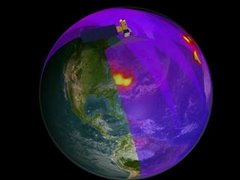
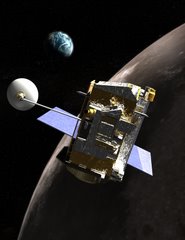
Helping staff the NASA exhibit booth was a lot of fun because I got to meet fellow informal science educators from all over everywhere. The NASA booth was a big hit, due in part to all the cool freebies we had to give away (like posters about the Lunar Reconnaissance Orbiter mission, trading cards with photos of Saturn's moons taken by the Cassini mission, lenticulars from the STEREO mission, etc.) and because we had an actual Apollo lunar sample and a shuttle tire that people could touch!
Sessions:
The "NASA Update" session focused largely on the upcoming 50th Anniversary of NASA on October 1, 2008. NASA has already launched a 50th Anniversary website where you can find information pertaining to all of the agency's anniversary-related plans and initiatives, including NASA's participation in the 2008 Smithsonian Folklife Festival. The session leaders also mentioned the new Field Trip to the Moon DVD and educational program developed by the American Museum of Natural History in partnership with NASA. The DVD and educational materials are available to educators for FREE!
The "Museums 2.0" session was also fantastic. The writer of the Museum 2.0 blog was one of the session leaders. She gave an overview of what Web 2.0 means and gave a couple examples of websites I hadn't heard of before: http://www.librarything.com/ and http://www.ilikemuseums.com/. These sites let users choose if they want to interact socially with other users. Other session leaders included representatives from several museums and science centers with Museum 2.0-style exhibits (i.e. the exhibits encourage or offer opportunities for visitors to interact with each other, museum staff, and/or help create and shape the exhibit). The Ontario Science Centre, for example, has a sort of "scientific Times Square" in which visitors can view dynamic content and interact with each other and museum staff. The OSC also hosts an interesting website: http://www.redshiftnow.ca/. The Science Museum of Minnesota hosts a website called Science Buzz that allows for interactive social blogging by visitors and museum staff.
Polar-palooza!!
On Saturday evening I saw a preview of the International Polar Year initiative called Polar-palooza. It was absolutely fantastic and sobering at the same time. The scientists involved did an excellent job of communicating recent observations that indicate our poles are rapidly changing. Polar-palooza can be tailored to fit any audience and age group from students to the general public. I greatly encourage you to visit your nearest Polar-palooza event for an eye- and mind-opening experience.
Saturday, October 13, 2007:
Keynote:
This morning I attended the annual ASTC "meet and greet" breakfast, where I got to meet some of my colleagues from NASA for the first time. The morning’s keynote speaker was Geoffrey Canada, CEO/President of the Harlem Children’s Zone. His main point was that educating youth and their parents is the key to reducing crime in America. He suggested that we focus on engaging young people in bettering their communities so that they feel they’re living in a worthwhile place and doing worthwhile things. The goal is not to just get people into college such that they never return to their hometowns - instead he would prefer to see them want to return so that they can continue to make their communities better. Other suggestions: Optimism is key and contagious – we should all try it! Think outside the box. Remember that we all live in a global village.
NASA exhibit booth:
Helping staff the NASA exhibit booth was a lot of fun because I got to meet fellow informal science educators from all over everywhere. The NASA booth was a big hit, due in part to all the cool freebies we had to give away (like posters about the Lunar Reconnaissance Orbiter mission, trading cards with photos of Saturn's moons taken by the Cassini mission, lenticulars from the STEREO mission, etc.) and because we had an actual Apollo lunar sample and a shuttle tire that people could touch!
Sessions:
The "NASA Update" session focused largely on the upcoming 50th Anniversary of NASA on October 1, 2008. NASA has already launched a 50th Anniversary website where you can find information pertaining to all of the agency's anniversary-related plans and initiatives, including NASA's participation in the 2008 Smithsonian Folklife Festival. The session leaders also mentioned the new Field Trip to the Moon DVD and educational program developed by the American Museum of Natural History in partnership with NASA. The DVD and educational materials are available to educators for FREE!
The "Museums 2.0" session was also fantastic. The writer of the Museum 2.0 blog was one of the session leaders. She gave an overview of what Web 2.0 means and gave a couple examples of websites I hadn't heard of before: http://www.librarything.com/ and http://www.ilikemuseums.com/. These sites let users choose if they want to interact socially with other users. Other session leaders included representatives from several museums and science centers with Museum 2.0-style exhibits (i.e. the exhibits encourage or offer opportunities for visitors to interact with each other, museum staff, and/or help create and shape the exhibit). The Ontario Science Centre, for example, has a sort of "scientific Times Square" in which visitors can view dynamic content and interact with each other and museum staff. The OSC also hosts an interesting website: http://www.redshiftnow.ca/. The Science Museum of Minnesota hosts a website called Science Buzz that allows for interactive social blogging by visitors and museum staff.
Polar-palooza!!
On Saturday evening I saw a preview of the International Polar Year initiative called Polar-palooza. It was absolutely fantastic and sobering at the same time. The scientists involved did an excellent job of communicating recent observations that indicate our poles are rapidly changing. Polar-palooza can be tailored to fit any audience and age group from students to the general public. I greatly encourage you to visit your nearest Polar-palooza event for an eye- and mind-opening experience.
Subscribe to:
Posts (Atom)